Alpine Elegance: Where Luxury Shopping Meets Timeless Architecture in St. Moritz
Nestled in the heart of the Swiss Alps, St. Moritz isn’t just a winter wonderland—it’s a sensory journey where high-end shopping blends seamlessly with stunning alpine architecture. As sunlight glints off snow-draped rooftops and designer boutiques glow behind historic facades, you realize this is more than retail therapy. It’s culture, craft, and elegance woven into every stone and storefront. This is a place where centuries-old traditions meet contemporary luxury, not in conflict, but in harmony. Here, shopping is not merely about acquisition; it’s an experience shaped by history, design, and a deep respect for place. In St. Moritz, every step through the village is a passage through time, beauty, and intention.
The Allure of St. Moritz: More Than Just a Ski Destination
St. Moritz has long been synonymous with alpine refinement. Since the mid-19th century, when it first attracted European aristocracy seeking crisp mountain air and pristine snow, the town has cultivated an identity rooted in elegance and exclusivity. Yet its appeal extends far beyond skiing and snow-covered slopes. Today, St. Moritz is a year-round destination where nature, culture, and luxury converge in perfect balance. Visitors come not only for the legendary winter sports but also for the vibrant summer hiking trails, cultural festivals, and a lifestyle defined by understated sophistication. It is a place where tradition is honored, not discarded, and where modernity enhances rather than overshadows the past.
At the heart of this enduring charm lies the town’s architectural character. Unlike many alpine resorts that have succumbed to generic development, St. Moritz has preserved its visual identity through strict design guidelines and a deep community commitment to heritage. The buildings that line its streets are not mere backdrops; they are active participants in the visitor’s experience. Their thick stone walls, sloping roofs, and hand-carved details tell a story of resilience and craftsmanship. This architectural continuity transforms the town into a cohesive narrative—one that unfolds with every turn down a cobblestone lane or quiet courtyard.
Shopping in St. Moritz reflects this same ethos. It is not an afterthought or a commercial intrusion, but an extension of the town’s cultural fabric. The boutiques are not housed in glass towers or shopping malls but in centuries-old structures that have been thoughtfully adapted for modern use. This integration allows visitors to engage with luxury in a context that feels authentic and grounded. Whether browsing a haute couture collection or selecting a handcrafted watch, the experience is enriched by the surrounding architecture, which adds layers of meaning and memory to every interaction.
Architectural Identity: The Engadin Style That Defines the Town
The architectural soul of St. Moritz lies in the Engadin style, a distinctive building tradition native to the southeastern Swiss canton of Graubünden. Characterized by its sgraffito-decorated façades, stone foundations, wooden balconies, and steeply pitched roofs, this style is not merely ornamental—it is a response to the alpine environment. The thick stone walls provide insulation against freezing temperatures, while the high-pitched roofs allow heavy snow to slide off naturally, preventing structural damage. These features evolved over centuries as local builders adapted to the demands of mountain life, creating homes that were both functional and beautiful.
Sgraffito, one of the most iconic elements of Engadin architecture, involves scratching designs into layers of plaster to reveal contrasting colors beneath. These intricate patterns often include floral motifs, religious symbols, or geometric shapes, each carrying cultural significance. Many of the town’s older buildings still bear these hand-etched decorations, which have been carefully maintained or restored over time. Walking through St. Moritz, one notices how these details are not confined to private homes but are also present on shops, hotels, and public buildings, reinforcing a sense of unity and place.
The wooden balconies, another hallmark of the style, are more than decorative features. They serve as transitional spaces between the interior warmth and the alpine air, allowing residents to enjoy sunlight and views while remaining sheltered. Often painted in warm earth tones or left in natural wood, these balconies contribute to the town’s inviting aesthetic. The craftsmanship evident in their joinery and railings speaks to a tradition of skilled artisanship that continues to influence local design today.
This architectural heritage creates a powerful sense of authenticity for visitors. Unlike destinations where historic appearances are simulated, St. Moritz’s buildings are largely original or faithfully restored. This continuity allows shoppers to move through the town with a feeling of immersion, as though they are part of a living tradition rather than tourists observing a staged display. The architecture does not shout for attention; it whispers, inviting closer inspection and deeper appreciation. In this way, the built environment becomes a silent guide, shaping the rhythm and mood of the visitor’s journey.
Shopping as an Art Form: Design Within Historic Facades
In St. Moritz, luxury retail is not imposed upon the town—it is woven into its fabric. High-end brands such as Louis Vuitton, Prada, and Bally have established boutiques within historic buildings, transforming them into spaces where fashion and heritage coexist. What sets these shops apart is not just the merchandise they offer, but the care with which they integrate into their surroundings. Rather than stripping interiors to create sleek, modern environments, many retailers have preserved original architectural elements—vaulted ceilings, exposed wooden beams, stone fireplaces, and sgraffito walls—allowing the past to frame the present.
The result is a shopping experience that feels intimate and intentional. Inside these boutiques, the ambiance is warm and textured, a contrast to the minimalist sterility often found in urban flagship stores. The lighting is soft, the materials natural, and the displays thoughtfully arranged to complement the building’s character. A handbag may be displayed on a carved wooden console that dates back to the 18th century; a jewelry case might sit beneath a ceiling adorned with traditional motifs. These details do not distract from the products—they elevate them, suggesting that true luxury is not only about the object itself but about the context in which it is encountered.
One of the most striking examples of this integration can be found in boutiques that occupy former private residences. These buildings were once homes to wealthy families or prominent local figures, and their domestic scale lends a personal quality to the shopping experience. Rooms are not reconfigured into open-plan retail spaces but retained as distinct chambers, each offering a different mood and focus. Visitors move from room to room as they might in a private home, discovering collections in a sequence that feels curated rather than commercial.
This sensitivity to architectural integrity reflects a broader philosophy: that commerce can coexist with culture when approached with respect and care. The brands operating in St. Moritz understand that their presence is not just a business opportunity but a stewardship role. By honoring the buildings that house them, they contribute to the town’s enduring appeal and reinforce the idea that luxury is not about excess, but about meaning.
Via Serlas: The Pulse of Style and Stone
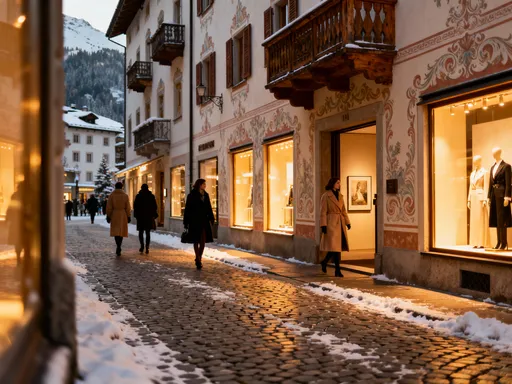
Via Serlas, the main shopping street in St. Moritz, is more than a retail corridor—it is a carefully composed streetscape where architecture, ambiance, and elegance converge. Gently sloping from the town center toward the edge of the lake, the street unfolds like a procession of alpine grandeur. Its cobblestone path, lined with snow-dusted trees and gas-lit lampposts, invites a slow, contemplative pace. The buildings on either side rise no higher than three or four stories, their façades unified by the use of local stone, sgraffito decoration, and traditional window proportions. This visual harmony is not accidental; it is the result of decades of urban planning dedicated to preserving the town’s character.
Each boutique along Via Serlas is a chapter in a larger story. Some occupy structures that have stood for over 200 years, their weathered walls bearing the marks of time and care. Others are newer constructions, but built to blend seamlessly with their neighbors through strict adherence to local design codes. Even the signage is regulated—discreet, understated, and often hand-painted—to ensure that branding does not overpower architecture. The effect is one of cohesion, where no single store dominates the streetscape, and the collective beauty of the street takes precedence over individual prominence.
What makes Via Serlas particularly remarkable is its ability to balance global luxury with local identity. International fashion houses share the street with Swiss watchmakers, local artisans, and family-run specialty shops. A visitor might pass a high-end fashion boutique housed in a 19th-century mansion, then step into a small chocolatier operating from a centuries-old cottage. This mix creates a dynamic yet harmonious retail environment, where the experience of shopping feels both cosmopolitan and rooted.
The street’s seasonal transformations further enhance its appeal. In winter, it is blanketed in snow, its eaves heavy with icicles, and its shop windows glowing like lanterns. In summer, the stone façades warm in the sun, and flower boxes overflow with alpine blooms. Throughout the year, Via Serlas remains a place of beauty and discovery, where every visit offers new details to admire. It is not simply a place to shop, but a place to be—a living example of how urban design can elevate everyday experiences.
Hidden Courtyards and Secret Galleries: Shopping Beyond the Street Level
While Via Serlas captures much of the attention, some of St. Moritz’s most memorable shopping experiences lie just beyond the main thoroughfare, tucked within enclosed courtyards and heritage buildings. These hidden spaces, often accessed through arched passageways or unmarked doors, offer a quieter, more intimate alternative to the bustle of the primary street. They are the town’s best-kept secrets—places where discovery feels personal and exclusive.
Many of these courtyards were once part of larger residential complexes or monastic properties, their central open spaces designed for communal use. Today, they have been repurposed to house small galleries, artisan workshops, and boutique ateliers. A jeweler might operate from a sunlit studio overlooking a cobblestone courtyard, crafting one-of-a-kind pieces inspired by alpine motifs. A local designer could present a limited collection in a converted stables building, where wooden beams and stone walls provide a dramatic backdrop for hand-dyed textiles and woolen garments.
These spaces thrive on discretion. There are no flashy signs or digital displays—entrances are often subtle, even unmarked, requiring visitors to look closely or follow word-of-mouth recommendations. This sense of exclusivity enhances the experience, making each discovery feel earned rather than handed over. It also reflects a broader cultural value in St. Moritz: that true luxury is not about visibility, but about authenticity and connection.
Art galleries are particularly well-represented in these hidden enclaves. Many showcase works by Swiss and international artists who draw inspiration from the alpine landscape—its light, its seasons, its solitude. Paintings, sculptures, and photographs are displayed in rooms with original fireplaces and wooden floors, creating an atmosphere more akin to a private collection than a commercial space. Visitors are encouraged to linger, to engage with the art, and to speak with the curators or artists themselves when present. These interactions transform shopping into dialogue, deepening the emotional resonance of any purchase.
For those seeking unique gifts or personal treasures, these courtyard boutiques offer alternatives to mass-produced luxury. A hand-carved walking stick, a custom-made leather journal, or a silver pendant shaped like a mountain flower—each item carries the imprint of its maker and its place. In a world increasingly dominated by globalized retail, these spaces stand as reminders that value can be measured not only in price, but in story, skill, and soul.
Sustainability and Preservation: How St. Moritz Balances Modern Commerce with Heritage
One of the most remarkable aspects of St. Moritz is its ability to support a thriving luxury economy while maintaining strict architectural and environmental standards. This balance is not achieved by accident, but through a comprehensive framework of preservation laws, urban planning policies, and community values. The town has long recognized that its greatest asset is its character—and that character is inseparable from its built environment.
Local regulations strictly control new construction, limiting building heights to ensure that no structure overshadows the skyline or obstructs views of the surrounding mountains. Facade alterations are closely monitored, with any modifications required to align with traditional materials and design principles. Even roof angles and window proportions are subject to review, ensuring that new buildings harmonize with their historic neighbors. These rules apply equally to private homeowners and commercial developers, reinforcing a shared commitment to visual continuity.
Equally important is the emphasis on sustainable restoration. Rather than demolishing old buildings, property owners are encouraged to rehabilitate them using energy-efficient techniques that do not compromise authenticity. Insulation may be added behind historic walls, modern heating systems discreetly integrated, and renewable energy sources like solar panels installed in ways that remain visually unobtrusive. These efforts reflect a forward-thinking approach to preservation—one that honors the past while preparing for the future.
The economic benefits of this approach are clear. By maintaining its architectural integrity, St. Moritz continues to attract visitors seeking an experience that cannot be replicated elsewhere. The town’s reputation for elegance and authenticity enhances the value of its retail offerings, allowing brands to operate in a context that elevates their image. At the same time, local artisans and small businesses benefit from a tourism economy that values craftsmanship and individuality over uniformity.
This model offers a powerful example for other destinations facing the pressures of commercialization. It demonstrates that economic vitality and cultural preservation are not mutually exclusive, but can reinforce one another when guided by vision and discipline. In St. Moritz, commerce does not erode heritage—it sustains it.
Beyond the Purchase: Why Architecture Makes Shopping Meaningful
In an age of fast fashion and digital shopping, the experience of buying something in person has become increasingly rare. In St. Moritz, that experience is not only preserved but elevated. Here, shopping is not a transaction, but a narrative—a sequence of moments shaped by light, texture, history, and design. The architecture does not merely house the boutiques; it participates in the experience, lending depth and resonance to every interaction.
When a visitor steps into a boutique housed in a 200-year-old building, they are not just browsing products—they are engaging with layers of history. The stone walls have absorbed generations of voices; the wooden floors have borne the footsteps of countless lives. Even the light filtering through a sgraffito window carries a quality unique to this place. These elements create an atmosphere of reverence, where the act of selecting a scarf, a watch, or a piece of art feels imbued with significance.
True luxury, as St. Moritz understands it, is not about opulence alone. It is about connection—to place, to craft, to continuity. It is the knowledge that what you are holding was made by hands that care, in a space that has stood the test of time. It is the quiet pride of owning something that belongs to a story much larger than oneself. In this way, the town redefines what it means to shop, transforming it from a momentary indulgence into a lasting memory.
St. Moritz stands as a model of how commerce and culture can coexist with grace. It proves that luxury need not come at the expense of authenticity, and that beauty can be both timeless and functional. For the discerning traveler—particularly the thoughtful woman who values quality, tradition, and meaning—this alpine jewel offers not just things to buy, but experiences to cherish. In the end, it is not the purchase that lingers, but the feeling: of awe, of belonging, of having touched something truly enduring.