You Won’t Believe What I Ate in Salvador — A Food Adventure Like No Other
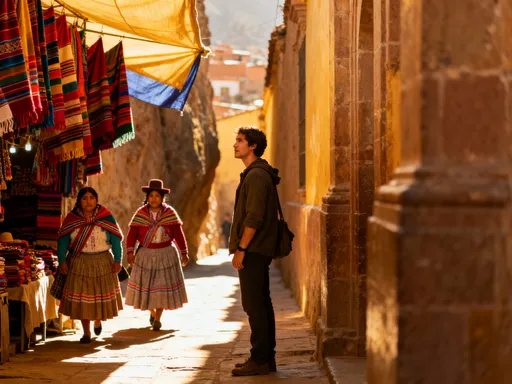
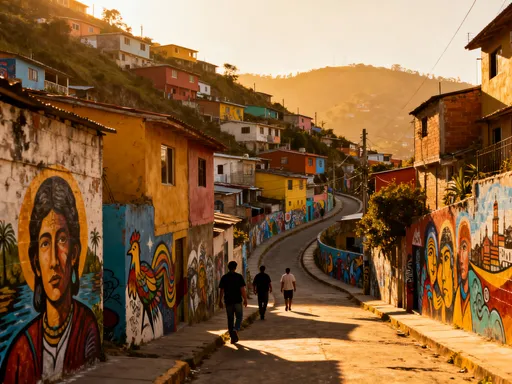
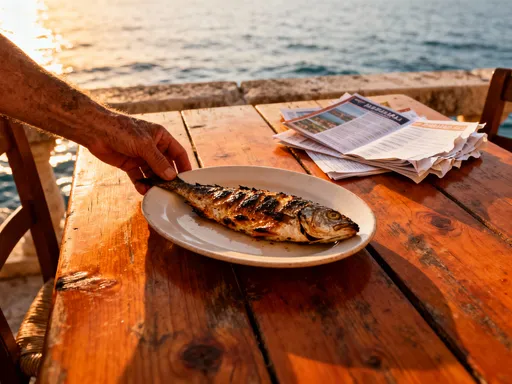
Salvador, Brazil, isn’t just a feast for the eyes with its colorful colonial streets and vibrant culture — it’s a full-on sensory explosion for food lovers. I went looking for history and sunshine, but ended up discovering a culinary world I never expected. From sizzling street stalls to family-run bares tucked in hidden corners, every bite told a story. This is specialty dining at its most authentic — bold, flavorful, and deeply rooted in Afro-Brazilian tradition. The air hums with the scent of grilled fish, hot oil, and coconut milk. Music spills from open doorways, and laughter echoes in alleyways where elders sip coconut water from green husks. Here, food is not just sustenance; it’s celebration, memory, and identity served on a plate.
Arrival in Salvador: First Impressions That Sparked a Food Journey
The moment I stepped off the plane at Deputado Luís Eduardo Magalhães International Airport, Salvador wrapped me in warmth — both literal and emotional. The tropical air, thick with humidity and the faint aroma of roasted peanuts and spices, signaled that this was no ordinary destination. As I rode into the city, past lush hills dotted with pastel-colored homes, I caught glimpses of women in white turbans selling food from roadside carts. My original plan had been to explore historic sites and soak up coastal views, but within hours, Salvador made it clear: the real journey would be through its cuisine.
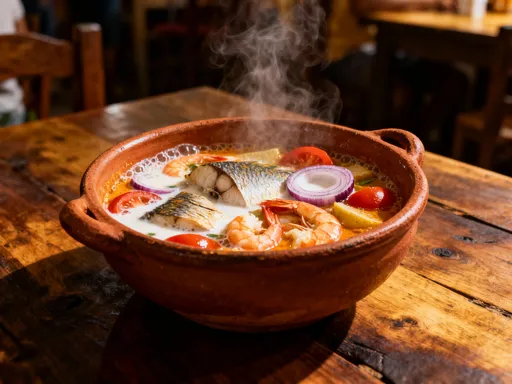
That first evening, jet-lagged and curious, I wandered down to the seaside neighborhood of Barra. With no reservations and only a phrasebook’s worth of Portuguese, I followed the sound of laughter and sizzling oil to a small botequim — a local term for a casual neighborhood bar serving drinks and simple, hearty dishes. The space was modest: plastic tables, ceiling fans spinning slowly overhead, and a chalkboard menu written in looping cursive. A kind server, noticing my hesitation, pointed to a dish called moqueca and gave me an encouraging nod. Moments later, a steaming clay pot arrived, bubbling with red peppers, onions, and tender chunks of fresh-caught grouper swimming in a creamy coconut broth. It was rich, aromatic, and deeply comforting — the kind of meal that makes you forget your exhaustion and remember why you travel.
What struck me most wasn’t just the flavor, but the warmth with which it was shared. The owner brought over a small glass of cachaça, explaining it was a welcome gesture. No transaction, no expectation — just generosity. That night, I realized that in Salvador, food is not merely consumed; it’s offered. And every plate comes with a story, a smile, or sometimes, a song. This spirit of openness became the thread that guided my entire culinary exploration.
The Heart of Salvador’s Cuisine: Afro-Brazilian Roots and Bold Flavors
To understand Salvador’s food is to understand its soul — a soul shaped profoundly by centuries of African heritage. As the first capital of colonial Brazil and a major port in the transatlantic slave trade, Salvador became a cultural crossroads where West African traditions merged with Indigenous and Portuguese influences. Nowhere is this fusion more evident than in the city’s cuisine, where every dish carries echoes of resilience, memory, and identity.
At the heart of many traditional recipes lies dendê oil — a deep red, fragrant palm oil introduced by African ancestors. More than just a cooking fat, dendê is a symbol of cultural pride. Its bold, earthy flavor transforms simple ingredients into something extraordinary. When heated, it releases a warm, nutty aroma that fills entire neighborhoods, especially in the historic Pelourinho district. Paired with coconut milk, malagueta peppers, and fresh herbs like cilantro and mint, dendê creates a flavor profile that is simultaneously fiery, creamy, and complex — a taste unlike any other in Brazil.
Dishes like acarajé, vatapá, and caruru are not just staples; they are edible history. Acarajé, perhaps the most iconic, is a deep-fried ball of black-eyed pea dough stuffed with shrimp, vatapá (a creamy paste made from bread, shrimp, coconut milk, and ground peanuts), and caruru (a okra-based stew seasoned with nuts and spices). Traditionally prepared by women known as baianas, these offerings were once sold as sacred food near Candomblé temples. Today, they remain a powerful symbol of Afro-Brazilian spirituality and culinary artistry. Eating acarajé isn’t just a snack — it’s a gesture of respect toward a culture that has preserved its identity through food, faith, and resilience.
What makes Salvador’s cuisine truly special is how openly it honors its roots. Unlike cities where tradition is diluted for tourist appeal, Salvador serves its heritage proudly, unapologetically. Every bite feels intentional — not for show, but as an act of continuity. In this way, dining here becomes more than a pleasure; it becomes an education, a celebration, and a connection to something much larger than oneself.
Street Food Magic: Where Authenticity Meets Everyday Life
If Salvador’s soul lives in its food, then its heartbeat pulses strongest on the streets. Here, culinary magic unfolds not in polished restaurants but on sidewalks, plazas, and corners where women in traditional white dresses and towering turbans tend to small grills and steaming pots. These are the baianas de acarajé — guardians of a centuries-old tradition — and their presence turns the city into a living, breathing open-air kitchen.
In Pelourinho, the historic heart of Salvador, the scent of frying dough and hot dendê oil draws crowds like a magnet. I watched one baiana, Dona Maria, as she worked with the precision of a master chef. Her hands moved swiftly — shaping the bean paste, dropping it into sizzling oil, flipping the golden acarajé with practiced ease. She offered me one with all the fillings, wrapping it in a sheet of wax paper. The first bite was revelatory: crisp on the outside, soft within, with a burst of savory, slightly spicy flavor from the shrimp and vatapá. The dendê oil gave it a richness that lingered on the palate, while the malagueta pepper provided just enough heat to awaken the senses.
Street food in Salvador is not a tourist gimmick — it’s how locals eat. Children stop by after school, office workers grab lunch between meetings, and families gather in the late afternoon for a shared snack. This everydayness is what makes it so authentic. There’s no menu translation, no online reservation, no Instagrammable plating — just real food, made by hand, served with pride. To eat on the streets of Salvador is to participate in the rhythm of daily life, to become, even briefly, part of the community.
For visitors, enjoying street food safely is a matter of observation and instinct. I quickly learned to look for stalls with high turnover — a sign of freshness — and to watch how food is handled. The best vendors use gloves or tongs, keep ingredients covered, and fry items to order. I avoided anything sitting out in the sun and stuck to places where locals were already eating. With these simple precautions, I never had an issue — only unforgettable flavors. The key is respect: respect for the food, the vendor, and the tradition behind every dish.
Hidden Gems: Off-the-Beaten-Path Spots Only Locals Know
Beyond the postcard-perfect streets of Pelourinho and the bustling markets lies another Salvador — quieter, less polished, but no less delicious. In neighborhoods like Rio Vermelho, Cajazeiras, and Liberdade, family-run restaurants and backyard comedores serve some of the city’s most authentic meals, known only to those who live there or have earned the trust of a local guide.
One afternoon, a taxi driver named Carlos, after noticing my interest in food, offered to take me to a place “where real Salvadorians eat.” We drove through narrow streets, past colorful murals and open-air markets, until we arrived at a modest house with a hand-painted sign: Comedor da Tia Lúcia. There was no menu — just Tia Lúcia herself, welcoming us with a warm smile and a wave toward the plastic chairs set up in her backyard. Within minutes, she brought out a feast: feijoada made with black beans and smoked meats, farofa toasted with butter and onions, fried plantains, and a salad of tomatoes, onions, and cilantro drenched in lime juice.
But the star was moqueca de peixe — fish stew slow-cooked in a clay pot with coconut milk, dendê oil, tomatoes, and cilantro. The broth was velvety, deeply aromatic, and perfectly balanced between richness and brightness. As I ate, Tia Lúcia shared stories — about her childhood in a fishing village, her grandmother’s recipes, and how she started cooking for neighbors during Carnival. Each dish came with a memory, a lesson, a piece of her life. This wasn’t just a meal; it was hospitality in its purest form.
Finding places like this requires curiosity and a willingness to stray from the guidebook. I learned to ask taxi drivers, shopkeepers, and even hotel staff where they eat on their days off. I followed crowds after church on Sundays and lingered in markets until someone offered a recommendation. Sometimes, I simply wandered and let the smell of food lead me. These moments of spontaneity yielded the most meaningful experiences — not because the food was always perfect, but because it was real, shared, and rooted in community.
From Market to Table: A Day at Mercado Modelo and Beyond
No visit to Salvador is complete without a walk through Mercado Modelo, a vibrant marketplace perched on the edge of the bay. While it draws tourists with its array of crafts and souvenirs, the market’s true magic lies in its food stalls and open kitchens, where the city’s culinary traditions come alive in real time.
I spent a morning wandering the aisles, where the air was thick with the scent of grilled cheese, dried shrimp, and tropical fruits. Vendors displayed pyramids of cashews, jars of honey infused with ginger, and bundles of fresh herbs tied with twine. At one stall, an elderly woman shaped acarajé by hand, frying them one by one in a wide skillet. I bought one with all the fixings and ate it standing at a small counter, watching fishermen unload their catch just outside the market doors.
What makes Mercado Modelo special is its role as a bridge between land and table. Here, you see the ingredients before they become dishes — the bright red malagueta peppers, the coconuts cracked open with machetes, the fresh prawns still glistening with seawater. Artisans make doce de leite in copper pots, stirring slowly over low heat, while others press sugarcane juice on the spot. This transparency offers a rare glimpse into the quality and care that go into Salvador’s food culture.
I also visited smaller, lesser-known markets in residential neighborhoods, where locals shop for daily meals. At Feira de São Joaquim, one of the largest in the city, I watched farmers unload crates of mangoes, papayas, and aipim (cassava). Butchers displayed cuts of meat with pride, and fishmongers arranged their catch on beds of ice. I sampled pastéis — crispy fried pastries filled with cheese or meat — and sipped on caldo de cana, a refreshing sugarcane juice served with a wedge of lime. These markets aren’t just places to buy food; they’re community hubs, where news is exchanged, friendships are strengthened, and traditions are passed down.
Fine Dining with Soul: Elevated Takes on Traditional Flavors
While street food and home kitchens define Salvador’s culinary soul, the city also boasts a growing number of restaurants that honor tradition while embracing refinement. These are not places that reinvent the wheel — rather, they elevate familiar dishes with careful technique, premium ingredients, and thoughtful presentation, all without losing the essence of what makes the food meaningful.
One evening, I dined at a mid-tier restaurant in Rio Vermelho, recommended by a local food blogger. The space was intimate — soft lighting, white tablecloths, and the gentle sound of bossa nova in the background. I ordered moqueca baiana, and when it arrived, it was a thing of beauty: served in a traditional unglazed clay pot, the stew still bubbling gently, its surface glistening with dendê oil and flecks of green cilantro. The fish — fresh sea bass — flaked apart at the touch of a fork, and the broth was luxuriously creamy, infused with coconut milk and a hint of lime.
What impressed me most was the balance. The chef had not altered the core recipe — the dish remained true to its roots — but the attention to detail elevated it. The fish was perfectly timed, the vegetables crisp-tender, the seasoning precise. A side of pirão, a thick cassava-based porridge, was served in a small bowl, ideal for soaking up every last drop of sauce. Even the bread — warm, slightly sweet rolls — felt like a nod to home, but with a touch of elegance.
This kind of dining proves that authenticity and sophistication are not mutually exclusive. Salvador’s best restaurants understand that tradition is not a limitation — it’s a foundation. They respect the past while inviting new generations to experience it with fresh eyes. For travelers, these spaces offer a comfortable entry point into local cuisine, especially for those who may feel uncertain about street food or home-style meals. Yet they never feel sterile or overly formal; there’s always a warmth, a sense of welcome, that keeps the soul intact.
Planning Your Own Food Adventure: Practical Tips for Travelers
For those dreaming of their own culinary journey through Salvador, timing can make all the difference. The city comes alive during festivals, when food takes center stage. Círio de Nazaré in October draws thousands with its religious processions and special dishes prepared in homes and temples. Festa de Iemanjá on February 2nd honors the Afro-Brazilian sea goddess with offerings of white flowers, candles, and, of course, food — including acarajé and other sacred dishes tossed into the waves as gifts. Visiting during these times offers a rare glimpse into the spiritual dimensions of Salvador’s cuisine.
Navigating the city as a food traveler is easier than it might seem. While Portuguese is the primary language, many vendors in tourist areas understand basic English, and pointing at what others are eating works just as well. Cash is still king, especially at street stalls and small restaurants, so carrying small bills is wise. Meal times tend to be later than in North America or Europe — lunch often starts around 12:30 or 1 p.m., and dinner may not begin until 8 or 9 p.m. Adapting to this rhythm allows for a more immersive experience.
Combining food exploration with sightseeing is simple. Begin your day with a walking tour of Pelourinho, then reward yourself with a late breakfast of tapioca crepes and fruit juice at a local café. In the afternoon, visit Mercado Modelo, sample snacks, and shop for spices to take home. End the day with a sunset at Farol da Barra, followed by dinner at a seaside botequim. This blend of culture, scenery, and flavor creates a travel experience that is both rich and deeply satisfying.
For families or older travelers, guided food tours are an excellent option. Led by knowledgeable locals, these tours provide context, ensure safety, and introduce dishes you might otherwise miss. They also support small businesses and help preserve culinary traditions. Whether you go solo or with a group, the key is openness — to try new things, to accept invitations, to eat with your hands if needed.
Salvador doesn’t just serve food — it shares its soul through every dish. What started as a simple trip turned into a deep appreciation for how culture, history, and flavor intertwine in the most delicious ways. This city proves that the best travel experiences often happen around a table. For anyone seeking real connection and unforgettable taste, Salvador’s specialty dining scene is a journey worth taking.