You Won’t Believe What This Greek Island Hides—Culture Like No Other
Milos, Greece isn’t just about beaches and sunsets. I was blown away by how deeply culture lives in its villages, traditions, and daily rhythms. From ancient fishing customs to vibrant festivals rooted in centuries-old history, this island offers a raw, authentic Greece you won’t find in guidebooks. It’s not just a destination—it’s a story unfolding with every stone path and whitewashed church. While other Cycladic islands have succumbed to mass tourism, Milos remains refreshingly untouched, where tradition isn’t performed for cameras but lived with quiet dignity. Here, culture isn’t preserved behind glass—it breathes in the sea air, echoes in village squares, and thrives in the hands of artisans and elders alike. This is travel that connects, not just entertains.
The Soul of Milos: Where Culture Meets Landscape
Milos is shaped by fire—literally. As a volcanic island in the southern Aegean Sea, its dramatic terrain of rugged cliffs, hidden coves, and multicolored rock formations is the legacy of ancient eruptions. This geology hasn’t just created postcard-perfect scenery; it has deeply influenced the island’s culture, economy, and way of life for thousands of years. The volcanic soil supports unique agriculture, while the coastline’s natural harbors made fishing not just a livelihood but a way of life. Unlike the flat, windmill-dotted landscapes of other Cycladic islands, Milos is hilly and textured, its villages clinging to slopes with panoramic views of the sea. This topography fostered tight-knit communities, where neighbors relied on one another through seasons of scarcity and abundance.
One of the most striking aspects of Milos is how seamlessly human life integrates with the land. The capital, Plaka, sits atop a hill like a sentinel, its white buildings cascading down toward the port. This elevated position wasn’t chosen for the view alone—it was strategic, offering protection during centuries of pirate raids and foreign invasions. Even today, walking through Plaka’s narrow alleys, one senses a deep respect for history and place. Residents speak proudly of their ancestors’ resilience, from mining sulfur and obsidian in ancient times to surviving periods of isolation and economic hardship. This enduring spirit is woven into the island’s cultural fabric, evident in the care taken to maintain old homes, traditions, and communal spaces.
What sets Milos apart is not just its natural beauty but the way its people have adapted to and honored their environment. Farming here is modest but meaningful, with small terraced plots yielding tomatoes, capers, and melons that thrive in the mineral-rich soil. Goats and sheep graze on sparse vegetation, providing milk for local cheeses. Fishing remains central, with families continuing practices passed down through generations. The island’s rhythm is tied to the sea and seasons, not tourist seasons or commercial demands. This harmony between land and life is not accidental—it’s the result of centuries of careful stewardship and cultural continuity.
Klima and Mandrakia: Living Museums by the Sea
Along the northeastern coast of Milos lie two of its most iconic and culturally significant settlements: Klima and Mandrakia. These fishing hamlets are defined by their distinctive syrmata—colorful, cube-shaped structures built directly into the rocky shoreline. Originally designed as boat houses, the syrmata provided shelter for fishing vessels and gear, protecting them from the elements. Over time, some were adapted into homes, creating a unique architectural style found almost nowhere else in the Cyclades. Today, Klima and Mandrakia are not open-air museums frozen in time; they are living, breathing communities where tradition and modern life coexist.
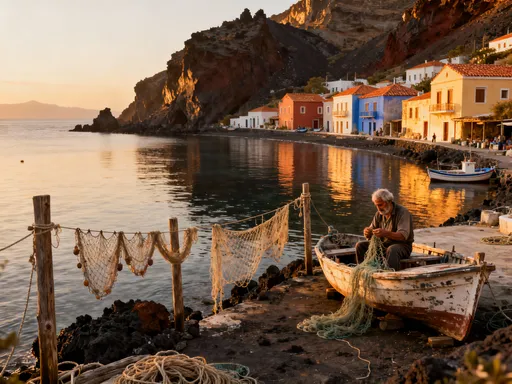
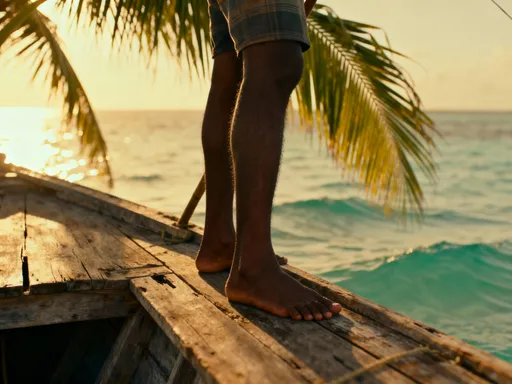
Walking through Klima is like stepping into a watercolor painting. Bright blue, red, and yellow doors open directly onto the sea, where small wooden boats bob gently in calm waters. Nets hang from lines, drying in the sun, while the scent of salt and grilled fish lingers in the air. Elderly fishermen can often be seen mending nets on stone benches, their hands moving with the precision of decades of practice. Children play near the water’s edge, and cats nap in shaded corners. There are no souvenir shops or crowded restaurants here—just real life, unfolding at its own pace. Visitors are welcome, but they are expected to observe quietly, respectfully, as guests in a private world.
Mandrakia, just a short walk from Klima, shares a similar charm but with a slightly more secluded feel. Its syrmata are fewer in number but equally vivid, some painted in soft pastels that reflect the morning light. The harbor is quieter, often used by local fishermen returning with the day’s catch. What makes these villages so special is their authenticity. Unlike more commercialized islands where traditional buildings have been converted into luxury rentals, most syrmata in Klima and Mandrakia are still owned and used by local families. Some serve as summer homes, others as active fishing stations. This continuity ensures that the culture remains alive, not repackaged for tourism.
The preservation of these coastal settlements is not accidental. Community-led initiatives and local pride play a significant role in maintaining their character. There are ongoing efforts to restore aging syrmata using traditional materials and methods, ensuring that repairs blend seamlessly with the original architecture. These efforts are supported by both residents and heritage organizations, reflecting a shared commitment to cultural sustainability. For travelers, visiting Klima and Mandrakia offers a rare opportunity to witness a way of life that is increasingly rare in the modern Mediterranean—one rooted in simplicity, resilience, and deep connection to the sea.
Plaka: The Island’s Cultural Heartbeat
If Klima and Mandrakia represent Milos’s maritime soul, then Plaka is its cultural and social heart. Perched on a hilltop overlooking the island and the Aegean Sea, Plaka is the administrative and spiritual center of Milos. Its labyrinthine streets, paved with local stone, wind upward toward the ruins of a Venetian castle that dates back to the 13th century. Though only fragments remain, the castle’s presence is a constant reminder of the island’s complex history—shaped by Cycladic, Byzantine, Venetian, and Ottoman influences. Yet, Plaka is not a relic; it is a vibrant, lived-in town where daily life unfolds in rhythm with tradition.
The architecture of Plaka is a beautiful blend of Cycladic simplicity and local character. Whitewashed houses with blue doors and window frames line the streets, many adorned with blooming bougainvillea and potted herbs. Courtyards open behind wooden gates, revealing family gardens and shaded seating areas where elders gather in the late afternoon. Small family-run cafes serve strong Greek coffee and homemade sweets, their owners greeting regulars by name. The central square, Agios Konstantinos, is the town’s social hub, where locals meet for conversation, music, and seasonal celebrations. In the evenings, especially during summer, the square comes alive with impromptu gatherings—children chasing each other, couples sharing a meal, and elders playing backgammon under the stars.
One of the most touching aspects of Plaka is the preservation of local language and customs. While standard Greek is spoken, many older residents use a distinctive island dialect that includes archaic words and unique expressions. These linguistic nuances are passed down orally, often during family meals or community events. Traditional songs, dances, and storytelling also remain part of everyday life, especially during religious festivals and family milestones. The sense of continuity is palpable—grandparents teach grandchildren how to prepare traditional dishes, mend fishing nets, or celebrate saints’ days with the proper rituals. This intergenerational exchange is not staged for tourists; it is the quiet engine of cultural survival.
Plaka also houses several small churches, each with its own feast day and local significance. These churches, often painted white with domes of blue or terracotta, are more than places of worship—they are community anchors. Their bell towers mark the passage of time, and their courtyards host weddings, baptisms, and memorial gatherings. The most prominent, Panagia Korfiatissa, sits just outside the main town and offers panoramic views of the island. Pilgrims visit year-round, especially during its annual festival, when the church is adorned with flowers and candles. For visitors, walking through Plaka is not just a scenic experience—it is an immersion in a culture that values memory, community, and quiet dignity.
Festivals That Keep Tradition Alive
In Milos, religious and seasonal festivals are not tourist attractions—they are vital expressions of community identity and spiritual life. The most significant of these is the Dormition of the Virgin Mary, celebrated on August 15th, a public holiday across Greece. In Milos, this festival is marked with deep reverence and joy, drawing residents from every village and many visitors from abroad. The days leading up to the 15th are filled with preparations: churches are cleaned and decorated, families gather, and local cooks prepare traditional dishes. On the evening of the 14th, a candlelit procession winds through the streets of Plaka, with hundreds of people carrying icons, flowers, and flickering candles. The atmosphere is solemn yet warm, a blend of faith, memory, and communal pride.
The feast of the Dormition is more than a religious observance—it is a full sensory experience. The scent of incense mingles with the aroma of grilled meats and baked pastries. Traditional music fills the air, played on instruments like the lyra and laouto. Men and women often wear elements of traditional dress: women in long black skirts and embroidered blouses, men in white shirts and dark vests. The following day, August 15th, is a celebration of abundance. Large communal meals are held in village squares, featuring dishes like artemis soup—a rich stew made with local vegetables and goat meat—and fresh octopus grilled over open flames. Wine flows freely, and toasts are made to health, family, and the island itself.
Other festivals throughout the year reflect the agricultural and maritime cycles of island life. In spring, the feast of Saint George honors shepherds and farmers, with blessings of livestock and fields. In summer, coastal villages like Klima celebrate the patron saint of fishermen, with boat processions and blessings of the sea. These events are deeply rooted in the rhythms of nature and tradition, serving as both spiritual observances and social glue. They reinforce community bonds, pass down customs, and remind younger generations of their heritage.
Visitors are generally welcome to observe and participate, provided they do so respectfully. There is no pressure to join in, but those who do—by lighting a candle, sharing a meal, or simply watching in silence—are often met with warmth and appreciation. These festivals are not performances; they are lived experiences, and their authenticity is what makes them so powerful. For travelers seeking meaningful connection, attending a local festival offers a rare window into the soul of Milos.
Craftsmanship and Local Artisans
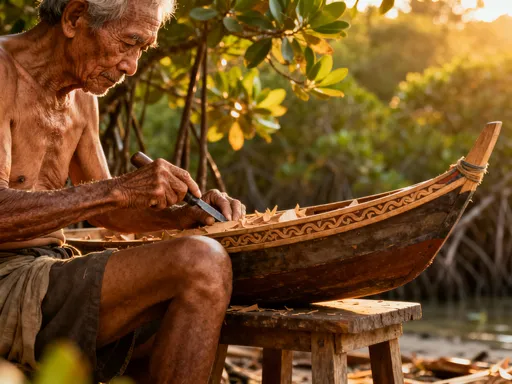
Artisanal craftsmanship is another pillar of Milos’s cultural identity. Despite the island’s small size, it is home to a surprising number of skilled makers—potters, lace-makers, stone carvers, and weavers—who continue traditions that date back centuries. These crafts are not hobbies; they are expressions of heritage, shaped by the island’s natural resources and historical influences. One of the most notable materials is obsidian, a volcanic glass that was mined and traded from Milos as early as 7000 BCE. Though no longer used for tools, obsidian inspires contemporary jewelry and decorative objects, linking modern artisans to their ancient ancestors.
Pottery is another enduring craft. Local potters use clay sourced from the island, shaping it on traditional wheels and firing it in wood-burning kilns. The designs often reflect Cycladic aesthetics—simple, elegant, and functional—with subtle nods to marine life and volcanic landscapes. These pieces are not mass-produced; each bowl, plate, or vase carries the mark of the maker’s hand. Some workshops offer demonstrations, allowing visitors to try their hand at the wheel or purchase one-of-a-kind items directly from the artist. This direct exchange supports local economies and fosters cultural appreciation.
Lace-making, particularly in the village of Trypiti, is a delicate art passed down through generations of women. Using fine cotton thread and small bobbins, artisans create intricate patterns that adorn tablecloths, napkins, and garments. The process is time-consuming and requires great patience, but the results are exquisite. Efforts are underway to preserve this craft through cultural cooperatives and workshops that teach younger women the techniques. Similarly, stone carving remains a respected skill, with local masons shaping volcanic rock into garden ornaments, door frames, and restoration materials for historic buildings.
These artisanal traditions are more than creative pursuits—they are acts of cultural preservation. By choosing to make and sell handmade goods, artisans resist the homogenization of mass tourism. Their work invites travelers to engage with Milos on a deeper level, to carry home not just souvenirs but stories. Supporting local makers—by purchasing their work or learning about their process—is one of the most meaningful ways to honor the island’s heritage.
Culinary Culture: More Than Just Food
In Milos, food is not just sustenance—it is memory, identity, and hospitality. The island’s cuisine reflects its geography, history, and way of life, blending Cycladic simplicity with unique local ingredients. Meals are slow, social events, often lasting hours, where conversation flows as freely as wine. Family-run tavernas, many operating for generations, serve dishes made with ingredients sourced from nearby fields, the sea, or home gardens. There is no need for elaborate menus; the daily specials are written on chalkboards, based on what is fresh and available.
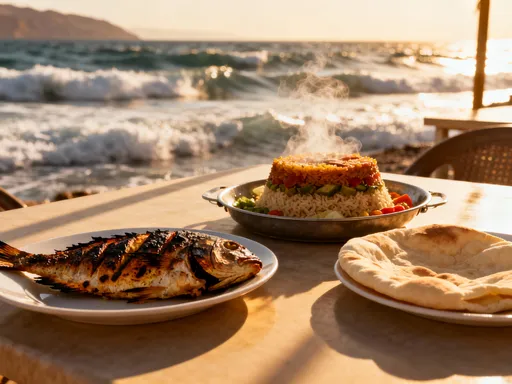
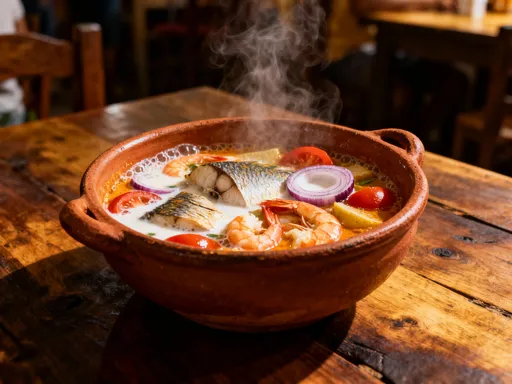
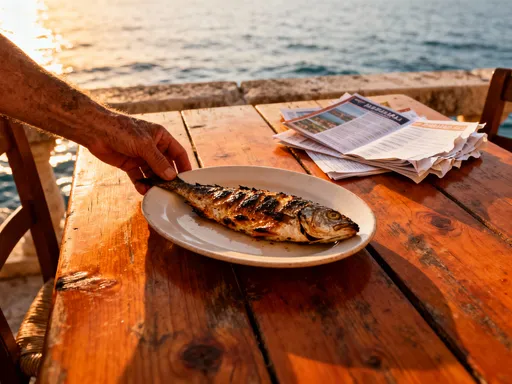
One of the most beloved dishes is spetzofai, a hearty stew made with本地 peppers, sausage, and tomatoes. Though originally from the mainland, it has been embraced in Milos with a local twist—often using smoked sausages made from goat or pork. Another staple is revithia, slow-cooked chickpeas simmered with onions, olive oil, and herbs until creamy and fragrant. This dish, traditionally cooked in wood-fired ovens overnight, is a symbol of patience and care. Seafood, of course, plays a central role. Octopus is grilled over charcoal, calamari is fried in olive oil, and fish is baked with lemon and herbs. Every meal is seasoned with wild oregano, thyme, and capers gathered from the hillsides.
The island’s culinary culture extends beyond restaurants. Open-air markets in Adamas and Plaka are vibrant hubs of local life, where farmers sell tomatoes, zucchini, and honey, and fishermen display the morning’s catch. Bartering is still common, and relationships matter more than price tags. Many families maintain small gardens or keep chickens, ensuring a steady supply of fresh produce. Cooking is a communal activity, often involving multiple generations—grandmothers teaching grandchildren how to knead dough for ladopita (olive oil pie) or roll grape leaves.
For visitors, sharing a meal in Milos is an invitation into the heart of the culture. It is not uncommon for a taverna owner to bring an extra dish “on the house” or offer a glass of homemade tsipouro (a strong distilled spirit) after dinner. These gestures are not marketing tactics—they are expressions of genuine hospitality. In a world where dining has become transactional, Milos reminds us that food is about connection, generosity, and the simple joy of breaking bread together.
Why Milos Stands Apart in the Cyclades
In a region known for its iconic islands—Santorini’s sunsets, Mykonos’s nightlife, Naxos’s beaches—Milos stands apart not for spectacle but for authenticity. It has not been reshaped by mass tourism or luxury developments. There are no high-rise hotels, no crowded beaches lined with sunbeds, no nightclubs blasting music until dawn. Instead, Milos offers a slower, more thoughtful way of traveling—one that prioritizes connection over consumption. This is not to say the island lacks beauty; its beaches, from Sarakiniko’s lunar landscape to Firiplaka’s golden sands, are among the most stunning in Greece. But the true allure of Milos lies beneath the surface, in its culture, people, and rhythms.
One of the most significant differences is the island’s scale and pace. With a permanent population of around 5,000, Milos remains intimate and accessible. Visitors can walk from the port to Plaka in under an hour, or explore remote coves by boat without encountering crowds. This lack of congestion allows for a deeper experience—one where you might share a coffee with a local fisherman, receive directions from a grandmother tending her garden, or be invited to a family celebration. These spontaneous interactions are not possible in more commercialized destinations, where tourism has created a barrier between visitors and residents.
Milos also benefits from a strong commitment to sustainable tourism. Local authorities and community groups have implemented measures to protect the environment and cultural heritage, from limiting construction in sensitive areas to promoting eco-friendly transportation. Visitors are encouraged to respect the landscape, support local businesses, and engage with the culture in meaningful ways. This approach ensures that tourism benefits the island without eroding its identity. For travelers, choosing Milos is not just a vacation decision—it is an ethical one, aligned with values of responsibility, respect, and authenticity.
Conclusion: Travel That Connects
Milos is not a place you simply visit; it is a place you experience. Beyond its breathtaking scenery lies a culture that is alive, resilient, and deeply rooted in community, tradition, and the natural world. It offers a rare opportunity to travel with intention—to move beyond checklists and hashtags and engage with a way of life that values connection over convenience. In an age where many destinations feel interchangeable, Milos stands as a testament to the enduring power of place and heritage.
For those seeking meaningful travel, Milos invites participation, not just observation. Attend a village festival, even if you don’t understand every ritual. Try saying kalimera (good morning) to a shopkeeper. Buy a piece of handmade lace or pottery directly from the artisan. Share a meal with locals and listen to their stories. These small acts create bridges, transforming tourism from extraction into exchange. They honor the people who call Milos home and enrich the traveler in return.
In the end, Milos reminds us that the best journeys are not measured in miles or photos, but in moments of connection—between people, cultures, and histories. It challenges us to travel not as consumers, but as guests, with humility and curiosity. And in doing so, it offers not just escape, but understanding. That is the true magic of this extraordinary island.